If you’re sourcing Ringlock scaffolding overseas—or managing a project that spans multiple regions—chances are you’ve run into questions like:
“Is this system compliant with EN 12811?”
“Does it meet ANSI or OSHA requirements?”
Here we’ve put together a side-by-side comparison of EN 12811 (Europe) and ANSI/ASSE A10.8 (U.S.)—focused specifically on Ringlock scaffolding systems.
🔩 1. Vertical Standards (Uprights)
This is the backbone of the entire Ringlock structure—both literally and legally.
| Key Parameter | EN 12811 (Europe) | ANSI/ASSE A10.8 (U.S.) |
|---|---|---|
| Material | S235JRH steel (EN 10219) | ASTM A500 Grade B or C |
| Tube Size | Ø48.3 mm × 3.2 mm | Ø48.3 mm × Schedule 40 (~3.68 mm) |
| Welding Standard | EN ISO 5817, with WPQR and WPS | AWS D1.1 structural welding, certified welders required |
| Load Testing | Mandatory axial, shear, and buckling tests | 4× safety factor recommended; testing methods flexible |
| Corrosion Protection | Hot-dip galvanized ≥ 70 µm (EN ISO 1461) | Hot-dip galvanized ≥ 610 g/m² (ASTM A123) or powder/spray coated |
💡 Pro Tip: European specs are slightly stricter on geometry and consistency. U.S. buyers tend to focus more on structural performance and OSHA compliance than on format uniformity.
2. Ledgers (Horizontals)
While uprights carry the weight, ledgers hold everything in place. Connection quality here is non-negotiable.
| Key Parameter | EN 12811 | ANSI/ASSE A10.8 |
|---|---|---|
| Common Size | Ø48.3 mm × 2.5–3.0 mm | Ø48.3 mm × Schedule 40 or ASTM custom sizes |
| Ends | Wedge-head connections (insert + hammer-lock) | Similar wedge-heads or bolted fittings; form less regulated |
| Connection Testing | Shear ≥ 14 kN; pull-out ≥ 7 kN (EN 12811-3) | No fixed values; 4× design load recommended |
| Max Span | Typically 1.5–2.5 m depending on class | OSHA guides < 2.4 m, though project-specific requirements apply |
What This Means for Fabricators: Even if the dimensions match, the load test values and connection performance may vary by market. Build it once, test it twice.
3. Diagonal Braces
Often overlooked—but critical for stability, especially in windy or high-load environments.
| Key Parameter | EN 12811 | ANSI/ASSE A10.8 |
|---|---|---|
| Connection Style | Wedge-lock into rosettes | Pins, bolts, or self-locking connectors |
| Testing | Must pass angled compression/tension tests | Testing optional; site engineers may request proof |
| Purpose | Wind load and seismic resistance required in design calcs | Stabilization role only; seismic design is left to engineers |
Engineering Insight: EN-compliant braces are more likely to come with documented performance data. That’s a selling point for government or industrial tenders.
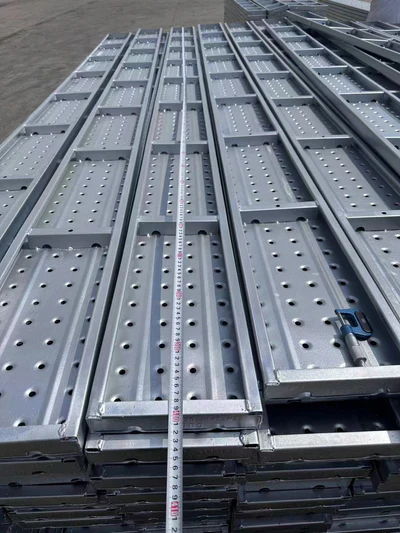
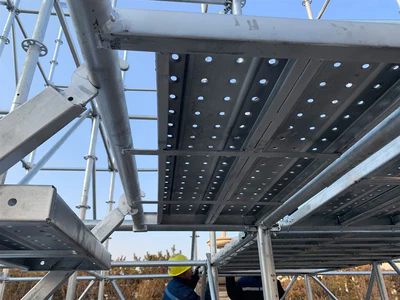
4. Decks (Steel Planks / Walkboards)
Decks may look simple—but they take abuse from traffic, weather, and gear drops. Buyers want peace of mind here.
| Key Parameter | EN 12811 | ANSI/ASSE A10.8 |
|---|---|---|
| Material | Perforated steel with ribs or treated plywood | Perforated steel, aluminum, or OSHA-rated plywood |
| Load Rating | ≥ 1.5 kN/m² (uniform); 2-point load test mandatory | Must withstand 4× design load; concentrated loads tested |
| Slip Resistance | Required (holes, serrations, anti-slip coating) | Required (embossed, gritted, or perforated finish) |
| Edge Details | ≥ 50 mm toe board or upturn | OSHA mandates toe boards or fall protection built-in |
Field Reality: American job sites are less prescriptive about deck form—so long as it’s strong, safe, and documented. EU inspectors often want factory test sheets.
Comply with the right standard isn’t just about ensuring safety, minimizing risk, and protecting your brand’s reputation in the global marketplace.
EN 12811 and ANSI/ASSE A10.8 are more than sets of numbers and acronyms. They reflect how different regions approach structural safety, inspection culture, and liability.