In aviation, safety and reliability leave little room for shortcuts. Every aircraft that leaves the hangar must perform as expected, and that assurance comes from constant, careful maintenance. Yet maintaining an aircraft isn’t quite the same as working on regular machinery — the scale, height, and curvature of the structure make access itself a technical challenge. That’s where maintenance staging, or aircraft scaffolding, quietly does the heavy lifting.
Here we will learn how different types of maintenance scaffolding are used around aircraft, what makes them effective, and how to choose the right setup for your maintenance program.
Why Specialized Scaffolding Matters
Aviation maintenance platforms do a lot more than provide somewhere to stand. They shape how safely and efficiently work can be carried out. A well-designed staging system can reduce downtime, prevent accidents, and even extend tool life — benefits that add up over hundreds of maintenance cycles.
Safety First, Always
Scaffolding used in aircraft MRO has to meet much stricter standards than anything on a construction site. Platforms need to be stable and slip-resistant, with proper guardrails and toe boards. Even a small tool falling from height can cause serious damage or injury.
Mobility and Ease of Use
Maintenance schedules move fast. Teams often shift from one section of the aircraft to another within hours. Good staging systems roll easily and lock securely, allowing quick repositioning without the need for a full teardown.
Adjustability and Fit
No two aircraft sections are the same. The curve of a fuselage, the angle of a wing, or the height difference between models means technicians need platforms that can adapt. Adjustable legs and modular components help the scaffolding “hug” the aircraft instead of standing awkwardly beside it.
The Right Materials
Most maintenance platforms are built from either aluminum alloy or steel. Aluminum versions are light and easy to move; they resist corrosion well. Steel is heavier but extremely sturdy, ideal when a task involves heavy parts or structural repairs. Many hangars use a mix, depending on the type of work.
Protecting the Aircraft Surface
It might sound trivial, but surface protection is a big deal. To avoid scratching sensitive skin panels, most staging systems include soft bumpers or padded contact areas. The closer the fit between the platform and aircraft, the more important that protection becomes.
Main Types of Aircraft Maintenance Staging
Over time, a few core designs have proven themselves in hangars worldwide. Each serves a slightly different purpose, depending on the maintenance task and aircraft size.
1. Modular Scaffolding Systems
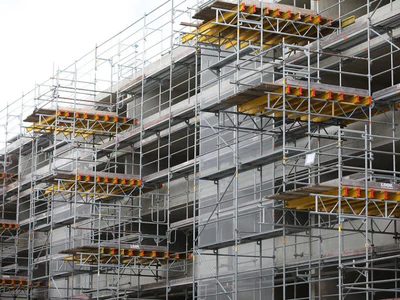
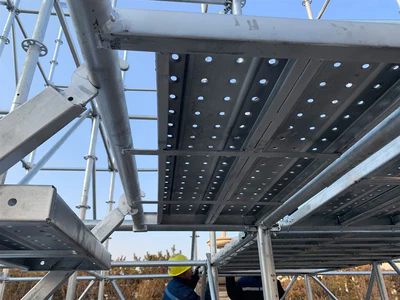
This is the “do-it-all” solution. Modular systems use standard tubes, ledgers, decks, and braces that can be arranged in many ways — a bit like a construction kit. Crews can build platforms around nearly any aircraft type without needing new equipment each time.
What Makes It Useful
- Works with a wide range of aircraft, from small trainers to wide-body jets.
- Easy to expand or reshape as needed — full wrap-around docks or partial access setups.
- Cost-effective in the long run since most parts can be reused.
Common Uses
- Heavy checks (C or D checks): Building complete docking systems that give access to the entire aircraft.
- Painting or surface treatment: Stable platforms for sanding, spraying, or drying.
- Structural work: When large panels need replacing, modular docks give strong and steady support.
2. Mobile Maintenance Stands
Not every job requires a big setup. For daily checks or spot repairs, mobile stands are more practical. These come pre-assembled, with heavy-duty casters, and can be wheeled into place in minutes.
Why Technicians Like Them
- Roll smoothly and lock firmly in position.
- Ready to use — no complex assembly.
- Available in many shapes: engine access stands, landing gear platforms, cockpit windshield ladders, and more.
Best Suited For
- Line maintenance: Quick pre-flight and post-flight inspections.
- Targeted work: Accessing smaller zones such as the engine bay or landing gear.
- Supporting major docks: Used to reach corners or under-wing areas that large scaffolds can’t cover easily.
3. Suspended Platforms
In crowded hangars, floor space is gold. Suspended scaffolds hang from the ceiling or overhead beams using cables or booms, freeing the area below for equipment and vehicles.
Why They’re Handy
- No legs on the floor — ideal when space is tight.
- Adjustable height, often motorized for precision.
- Great visibility and reach for technicians working on upper sections.
Where They Shine
- Accessing the fuselage crown and tail fin.
- Servicing wide-body aircraft wings from above.
These systems are more complex to install but offer unmatched efficiency for certain types of work.
4. Custom Docking Systems
Sometimes, one size truly doesn’t fit all. For fleets of similar aircraft or for military and special-mission planes, custom docks are built to fit specific contours and equipment layouts.
Key Advantages
- Designed around the aircraft’s exact geometry, leaving no awkward gaps.
- Can include built-in power outlets, air lines, and lighting for faster work.
- Higher upfront cost, but long-term efficiency pays off — especially when the same aircraft model is serviced repeatedly.
Where They’re Used
- Military bases: For aircraft with unusual shapes or configurations.
- Fleet operations: Airlines maintaining large numbers of identical models.
- Assembly lines: During aircraft manufacturing or systems installation.
Choosing the Right System
Selecting the right staging solution isn’t about buying the biggest or newest model. It’s about matching the system to your maintenance patterns, space, and budget.
If your team handles quick daily inspections, mobile stands will likely do the job. But if you manage full overhauls or paint operations, modular or custom docks make more sense. In some hangars, a mix of all three types works best.
Partnering with an experienced supplier can help you make better choices. They’ll know how to balance weight limits, platform height, and safety standards — and they can often customize designs to fit your layout.
Aircraft maintenance scaffolding might look simple, but it plays a quiet, central role in keeping aviation safe. The right setup can shorten turnaround times, improve technician comfort, and prevent costly damage.
Whether you’re managing a large MRO facility or a smaller maintenance base, it’s worth taking a close look at your staging systems. Small upgrades — a better locking caster, a new adjustable deck, or protective padding — can make a noticeable difference in everyday efficiency and safety.